+86 153 7870 3202
+86 153 7870 3202
As a critical component of automotive braking systems, brake pads directly impact driving safety, ride comfort, and long-term maintenance costs. For the Toyota Camry—renowned for its reliability and family-friendly design—ceramic brake pads have emerged as the premier upgrade choice, thanks to performance attributes that align seamlessly with the vehicle’s core positioning. This article examines the material science, key advantages, model-specific compatibility, and maintenance best practices of ceramic brake pads tailored for the Toyota Camry, illustrating how they elevate the vehicle’s overall driving experience.
Table of contents:
Material Composition: The Foundation of Ceramic Brake Pads’ Superior Performance
Core Performance Advantages: Aligned with Camry’s Driving Profile
Model-Specific Adaptability: Engineered for the Camry
Maintenance Best Practices for Optimal Performance
Conclusion: A Definitive Upgrade for Toyota Camry
Ceramic fibers deliver exceptional heat resistance, maintaining structural integrity at 500–600℃ during intense braking. Aramid fibers boost mechanical strength and wear resistance, withstanding extreme pressure and shear forces without deformation. Premium binders ensure robust cohesion of all components, preventing material separation under harsh driving conditions—critical for consistent performance in daily commutes and long-distance travel.
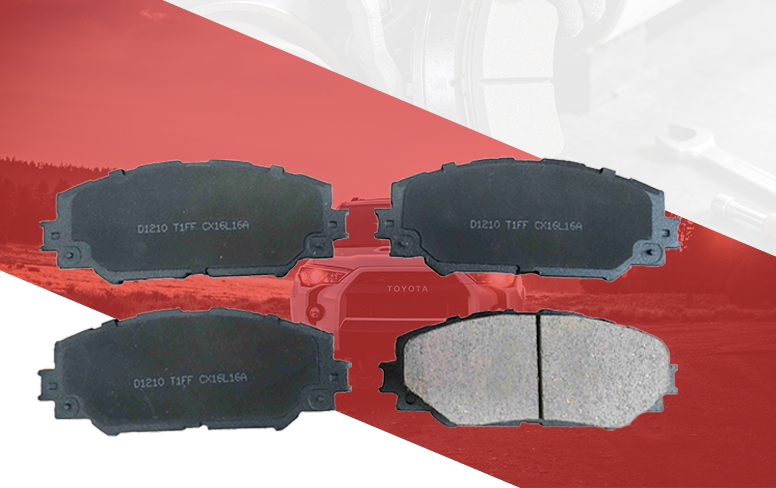
With a service life of up to 100,000 kilometers—50% longer than semi-metallic pads—ceramic options align with the Camry’s low-maintenance design. Their moderate hardness minimizes brake disc wear by 60%, extending disc lifespan by 20%. This reduces the frequency of pad and disc replacements, significantly cutting long-term ownership costs for Camry drivers.
These pads adhere strictly to the Camry’s OE specifications (e.g., Bendix Priority 1 CFC 914), ensuring perfect compatibility with calipers and discs without modifications. They seamlessly adapt to both hybrid and fuel-powered Camry variants, delivering stable braking performance without compromising fuel efficiency or hybrid energy recovery.
Avoid prolonged continuous braking at high speeds or on descents to prevent heat buildup and performance degradation.
Inspect pad thickness every 20,000 kilometers; replace immediately if remaining thickness is less than 3 millimeters.
In temperatures below -20℃, lightly depress the brake pedal several times before driving to preheat the system and restore optimal friction.
Always select OE-matched or high-quality ceramic pads to avoid safety risks associated with inferior, non-compliant products.
RECENT NEWS
Ceramic Brake Pads Elevating SAAB Driving Prowess
Jun. 30, 2026
The Hidden Advantages of Ceramic Brake Pad Technology
Jun. 16, 2026
Sencheer Launches New Ceramic Brake Pads in May
Jun. 05, 2026
Custom Service
For the past 15 years, Sencheer is supplying the global market with custom brake pads using OE technology. Our customization range is wide and free, which covers logo, label, brand box, carton design, spraying code etc.
Contact Number
+86 153 7870 3202
Navigation
+86 153 7870 3202
Songjia Town Development Zone, Lingcheng District, Dezhou City, Shandong, China