+86 153 7870 3202
+86 153 7870 3202
In the realm of automotive braking systems, the performance of brake pads directly determines driving safety and overall vehicle reliability. Among various brake pad materials, ceramic brake pads have emerged as a premium choice, largely attributed to their exceptional heat stability. Unlike traditional metallic or organic brake pads that suffer significant performance degradation under high temperatures, ceramic brake pads maintain consistent functionality even in extreme thermal conditions, making them indispensable for modern vehicles, from daily commuter cars to high-performance vehicles. This article delves into the heat stability of ceramic brake pads, exploring its underlying mechanisms, performance advantages, practical implications and maintenance tips.
Table of contents:
The Material Foundation of Heat Stability
Heat Stability in Practical Braking Scenarios
Advantages Derived from Heat Stability
Maintenance for Sustained Heat Stability
The outstanding heat stability of ceramic brake pads stems from their unique composite material composition. Unlike semi-metallic brake pads that contain a high proportion of iron, steel or copper fibers, ceramic brake pads are formulated with advanced ceramic fibers, aramid fibers, iron-free fillers and high-temperature resistant binders. These ceramic fibers, typically composed of silica, alumina and zirconia, possess inherent high-temperature resistance, with a long-term service temperature of up to 1000 degrees Celsius. The dense structure formed by high-temperature sintering not only enhances the mechanical strength of the brake pads but also reduces thermal conductivity, preventing excessive heat from transferring to the brake calipers and other components, thus protecting the entire braking system from thermal damage.
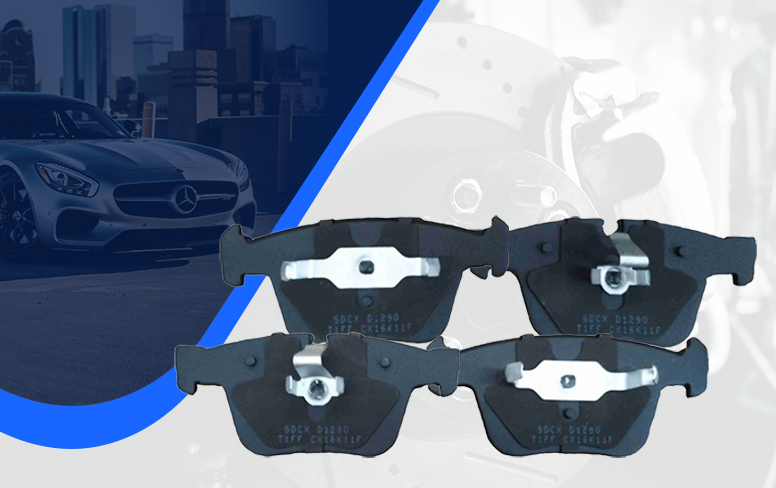
During actual driving, especially in high-speed or frequent braking situations, brake pads generate a large amount of heat due to friction between the pad and the rotor. For traditional brake pads, when the temperature exceeds 300 degrees Celsius, their friction coefficient begins to drop significantly, a phenomenon known as thermal fade, which reduces braking efficiency and even endangers driving safety. In contrast, ceramic brake pads maintain a stable friction coefficient of 0.45 to 0.55 even when the brake disc temperature reaches 650 degrees Celsius, ensuring consistent braking performance. In extreme scenarios such as continuous downhill driving or emergency braking at high speeds, where interface temperatures can soar to 800 to 900 degrees Celsius, the surface of ceramic brake pads undergoes sintering-like changes, forming a stable transfer layer that further enhances friction stability and avoids thermal fade.
The excellent heat stability of ceramic brake pads brings multiple practical advantages that distinguish them from traditional alternatives. Firstly, it ensures reliable braking safety in harsh conditions, such as high-speed driving or mountainous roads, where frequent braking is required, effectively preventing brake failure caused by thermal fade. Secondly, it extends the service life of both the brake pads and the brake rotors: the stable high-temperature performance reduces excessive wear of the friction material, allowing ceramic brake pads to have a service life of more than 100,000 kilometers, which is 50% longer than that of ordinary semi-metallic brake pads. Additionally, the low thermal conductivity of ceramic materials reduces the overall temperature of the braking system by about 20%, minimizing thermal deformation of brake components and reducing maintenance costs in the long run. Moreover, the stable friction at high temperatures also contributes to quieter braking, as it avoids the high-frequency vibrations that cause squealing in traditional brake pads.
To maintain the excellent heat stability of ceramic brake pads, proper maintenance is essential. Firstly, it is crucial to avoid sudden cooling after high-temperature braking, such as driving through deep water immediately after emergency braking, which can cause thermal shock and crack the brake pad material. Secondly, regular inspection of the brake pad thickness is necessary—when the friction layer is less than 3 millimeters, the brake pads should be replaced promptly to ensure their heat resistance and braking performance are not compromised. Additionally, choosing high-quality brake fluid that matches ceramic brake pads can help optimize heat dissipation and prevent the braking system from overheating. It is also recommended to check the flatness of the brake rotor regularly, as uneven rotors can cause uneven friction and affect the heat distribution of the brake pads, thereby reducing their heat stability over time.
RECENT NEWS
Ceramic Brake Pads Elevating SAAB Driving Prowess
Jun. 30, 2026
The Hidden Advantages of Ceramic Brake Pad Technology
Jun. 16, 2026
Sencheer Launches New Ceramic Brake Pads in May
Jun. 05, 2026
Custom Service
For the past 15 years, Sencheer is supplying the global market with custom brake pads using OE technology. Our customization range is wide and free, which covers logo, label, brand box, carton design, spraying code etc.
Contact Number
+86 153 7870 3202
Navigation
+86 153 7870 3202
Songjia Town Development Zone, Lingcheng District, Dezhou City, Shandong, China