+86 153 7870 3202
+86 153 7870 3202
Jeeps are synonymous with adventure, versatility, and uncompromising performance—whether navigating city streets, crawling over rocky trails, or cruising through winding mountain roads. At the heart of this iconic vehicle’s safety and performance lies its braking system, a critical component that determines control, responsiveness, and longevity. Among the various brake pad options available, ceramic brake pads have emerged as the premier choice for Jeep owners seeking to enhance their vehicle’s capabilities, combining advanced material science with real-world functionality. This article explores how ceramic brake pads redefine the braking experience for Jeeps, outperforming traditional alternatives and aligning perfectly with the brand’s spirit of adventure.
Table of contents:
The Science Behind Ceramic Brake Pads: A Leap Forward in Braking Technology
Why Ceramic Brake Pads Are the Ideal Match for Jeeps
Ceramic Brake Pads vs. Traditional Alternatives: A Clear Advantage for Jeeps
Conclusion: Elevate Your Jeep’s Performance with Ceramic Brake Pads
The Science Behind Ceramic Brake Pads: A Leap Forward in Braking Technology
Unlike conventional organic or semi-metallic brake pads, ceramic brake pads are engineered from a sophisticated composite of ceramic fibers, high-temperature bonding agents, and small amounts of non-ferrous metals (such as copper) to optimize performance. This unique formulation is the result of decades of automotive innovation, designed to address the limitations of traditional brake pads—including excessive noise, heavy brake dust, and inconsistent performance under extreme conditions.
The ceramic fibers form a dense, heat-resistant matrix that maintains structural integrity even when temperatures soar to 800–900°C during heavy braking, a common scenario for Jeeps tackling steep descents or frequent stop-and-go traffic. Unlike semi-metallic pads that rely on steel fibers (which can cause rotor wear and noise), ceramic pads are non-abrasive, ensuring a smoother, quieter operation while protecting the brake rotors from premature damage. This advanced composition is what makes ceramic brake pads uniquely suited to the diverse demands of Jeep driving, where reliability and durability are non-negotiable.
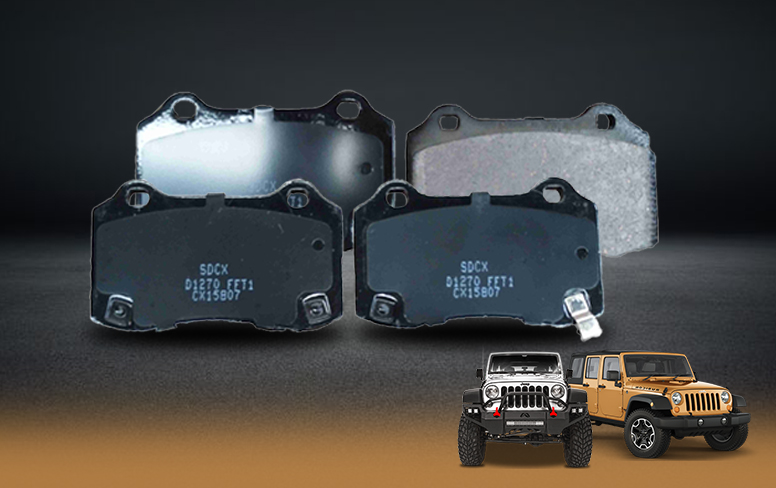
Why Ceramic Brake Pads Are the Ideal Match for Jeeps
Jeeps are built to handle a wide range of driving conditions, from daily commutes to off-road expeditions, and their braking systems must adapt accordingly. Ceramic brake pads offer a suite of advantages that directly address the unique needs of Jeep owners, making them a superior upgrade over stock or traditional brake pads.
1. Consistent Stopping Power Across All Terrains
One of the most critical benefits of ceramic brake pads is their ability to deliver consistent stopping power regardless of the environment—whether on wet pavement, dusty trails, or steep mountain roads. Jeeps often encounter unpredictable terrain, where sudden braking or sustained pressure on the brake pedal is required. Ceramic pads resist brake fade, a phenomenon where overheating reduces braking efficiency, ensuring that the vehicle remains responsive even during extended use. This consistency is particularly valuable for Jeep Wrangler, Cherokee, or Grand Cherokee owners who frequently venture off-road, where reliable braking can mean the difference between safety and disaster.
2. Ultra-Low Dust and Quieter Operation
Jeep owners take pride in their vehicle’s appearance, and traditional brake pads can mar that pride with heavy, dark brake dust that accumulates on wheels and requires frequent cleaning. Ceramic brake pads produce minimal, light-colored dust that does not adhere strongly to wheel surfaces, keeping Jeeps looking sharp with less maintenance effort. Additionally, the dense ceramic composition dampens high-frequency vibrations that cause the irritating squealing or grinding noises common with semi-metallic pads, creating a quieter, more refined driving experience—even in a body-on-frame vehicle like the Jeep Wrangler, which is already prone to wind and tire noise.
3. Longer Lifespan and Reduced Maintenance Costs
Jeeps are built to last, and their brake pads should too. Ceramic brake pads have a significantly longer lifespan compared to organic or semi-metallic alternatives, often lasting twice as long under normal driving conditions. Their non-abrasive nature also reduces wear on brake rotors, extending the life of the entire braking system and lowering long-term maintenance costs. For Jeep owners who log high mileage or use their vehicles for off-road adventures, this durability translates to fewer brake pad replacements and less time spent on maintenance—more time for exploring.
4. Compatibility with Jeep’s Unique Engineering
Leading brake manufacturers, such as Brembo and Hawk Performance, design ceramic brake pads specifically to match the technical specifications of various Jeep models, including the Wrangler (YJ, TJ, JL), Cherokee (XJ), and Grand Cherokee (ZJ). These pads are engineered to work seamlessly with Jeep’s anti-lock braking system (ABS) and heavy-duty suspension, ensuring optimal performance without compromising the vehicle’s original design. Whether upgrading a stock Jeep or a modified off-road build, ceramic brake pads integrate effortlessly, enhancing performance without requiring extensive modifications.
Ceramic Brake Pads vs. Traditional Alternatives: A Clear Advantage for Jeeps
To fully appreciate the value of ceramic brake pads for Jeeps, it’s essential to compare them to the two most common alternatives: organic and semi-metallic brake pads. Organic pads, made from rubber, glass, and resin, are affordable but wear quickly, produce excessive dust, and struggle with heat resistance—making them unsuitable for off-road or heavy-duty use. Semi-metallic pads, which contain steel or iron fibers, offer better heat resistance but are noisy, generate heavy brake dust, and wear down rotors faster.
Ceramic brake pads bridge the gap, offering the heat resistance of semi-metallic pads with the quiet, low-dust operation of organic pads—while exceeding both in longevity and consistency. For Jeeps, which demand versatility, this balance is critical: ceramic pads perform reliably on city streets, handle the rigors of off-road driving, and keep the vehicle looking and sounding its best.
Conclusion: Elevate Your Jeep’s Performance with Ceramic Brake Pads
Jeeps are more than just vehicles—they are a symbol of adventure, resilience, and freedom. To fully unlock their potential, every component must live up to the brand’s high standards, and the braking system is no exception. Ceramic brake pads represent the pinnacle of braking technology for Jeeps, offering consistent performance, ultra-low dust, quiet operation, and long-lasting durability that aligns perfectly with the vehicle’s intended use.
Whether you’re a daily commuter, an off-road enthusiast, or someone who simply values reliability and quality, upgrading to ceramic brake pads is a decision that enhances both the safety and enjoyment of your Jeep. By combining advanced material science with Jeep-specific engineering, ceramic brake pads don’t just stop your vehicle—they elevate its performance, ensuring that you can tackle every terrain with confidence and peace of mind. For Jeep owners who refuse to compromise, ceramic brake pads are not just an upgrade—they are a necessity.
Custom Service
For the past 15 years, Sencheer is supplying the global market with custom brake pads using OE technology. Our customization range is wide and free, which covers logo, label, brand box, carton design, spraying code etc.
Contact Number
+86 153 7870 3202
Navigation
+86 153 7870 3202
Songjia Town Development Zone, Lingcheng District, Dezhou City, Shandong, China