+86 153 7870 3202
+86 153 7870 3202
In the evolution of automotive braking systems, ceramic brake pads have emerged as a revolutionary upgrade, thanks to their comprehensive advantages over traditional metallic or organic counterparts. While properties like heat resistance, noise reduction, and long service life often take the spotlight, one subtle yet impactful detail—the low-dust feature—deserves in-depth exploration. This seemingly minor characteristic not only enhances the aesthetic appeal of vehicles but also reduces maintenance burdens, improves environmental friendliness, and even extends the lifespan of related braking components. This article delves into the low-dust feature of ceramic brake pads, uncovering its formation mechanism, practical benefits, and far-reaching significance in the automotive industry.
Table of contents:
What Makes Ceramic Brake Pads Low-Dust? The Science Behind the Detail
Beyond Aesthetics: Practical Benefits of Low-Dust Ceramic Brake Pads
The Impact of Low-Dust Feature on the Automotive Industry
Conclusion: A Small Detail with Great Value
What Makes Ceramic Brake Pads Low-Dust? The Science Behind the Detail
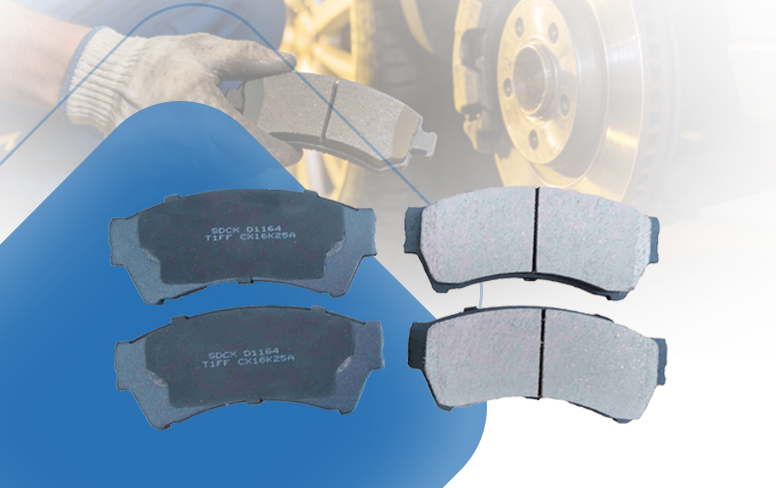
The low-dust performance of ceramic brake pads is not an accidental design but a result of precise material formulation and structural optimization. Unlike traditional metallic brake pads, which contain a high proportion of metal particles (such as steel, iron, or copper) that easily wear and generate dark, adhesive dust during friction, ceramic brake pads are composed of a sophisticated blend of ceramic fibers, non-ferrous fillers, high-temperature-resistant adhesives, and a minimal amount of non-abrasive metals (if any).
The core reason for low dust generation lies in the inherent properties of ceramic materials. Ceramic fibers, as the main component, have high hardness, good wear resistance, and stable chemical properties. When the brake pads clamp the rotating brake disc during braking, the friction between ceramic fibers and the disc is smooth and uniform, without generating a large amount of abrasive debris. Additionally, the non-ferrous fillers added to ceramic brake pads are designed to reduce friction wear and prevent dust adhesion—unlike the metal particles in semi-metallic pads, which easily peel off and form dense, sticky dust that adheres tightly to wheel hubs.
Moreover, the dust generated by ceramic brake pads is finer in particle size, lighter in color (usually light gray or white), and has weak electrostatic adsorption capacity. Most of this dust is blown away by airflow during vehicle operation, rather than accumulating on the surface of wheels. In contrast, the dust from metallic brake pads is coarser, darker, and highly adhesive, making it difficult to clean and easy to corrode wheel surfaces over time.
Beyond Aesthetics: Practical Benefits of Low-Dust Ceramic Brake Pads
While the most intuitive advantage of the low-dust feature is keeping wheel hubs clean, its value extends far beyond vehicle appearance. This detail brings tangible benefits to drivers, vehicle maintenance, and even the environment.
Reduced Maintenance Costs and Efforts
For most car owners, cleaning brake dust off wheel hubs is a tedious and frequent maintenance task. Metallic brake pads generate a large amount of sticky dust that adheres to wheel spokes and surfaces, requiring the use of professional cleaning agents and tools to remove. Over time, repeated cleaning may even scratch the wheel’s protective coating, leading to rust and corrosion. Ceramic brake pads, with their low-dust performance, can reduce the frequency of wheel cleaning by more than 30% compared to metallic ones. This not only saves car owners time and energy but also reduces the consumption of cleaning products, lowering long-term maintenance costs.
Protection of Wheel Hubs and Braking Components
The dust from metallic brake pads is not only unsightly but also corrosive. When mixed with moisture (such as rainwater or dew), the metal particles in the dust can react chemically with the wheel hub material, causing rust, discoloration, and even damage to the wheel’s structural integrity. Ceramic brake pad dust, on the other hand, is non-corrosive and has weak adhesion, so it will not cause damage to wheel hubs even if it accumulates slightly. Additionally, the low wear rate of ceramic brake pads (thanks to their high wear resistance) also reduces the amount of debris entering the brake caliper and other components, minimizing wear on the brake disc and extending the overall service life of the braking system.
Environmental Friendliness and Health Protection
Brake dust is an often-overlooked source of automotive pollution. The dust generated by metallic brake pads contains heavy metal particles (such as copper, iron, and lead), which can enter the air, soil, and water bodies, causing environmental pollution and posing potential risks to human health when inhaled. Ceramic brake pads generate significantly less dust, and the dust they produce does not contain harmful heavy metals, making them more environmentally friendly. For urban drivers who frequently encounter traffic jams and frequent braking, the low-dust feature also means less dust pollution in the surrounding air, contributing to better air quality inside and outside the vehicle.
The Impact of Low-Dust Feature on the Automotive Industry
The low-dust feature of ceramic brake pads has not only changed consumers’ maintenance habits but also driven the upgrading of the automotive braking industry. As car owners’ demand for driving comfort and vehicle aesthetics continues to increase, automakers are increasingly choosing ceramic brake pads as standard or optional equipment for new models—especially for mid-to-high-end passenger cars and luxury vehicles that prioritize comfort and appearance.
In response to market demand, brake pad manufacturers are also continuously optimizing the formulation of ceramic materials to further reduce dust generation while maintaining other excellent properties. For example, some manufacturers have developed copper-free ceramic brake pads, which not only retain the low-dust advantage but also address environmental concerns about copper pollution, complying with increasingly strict environmental regulations in regions such as North America and Europe. This continuous innovation, driven by the low-dust detail, is promoting the entire brake pad industry towards a more environmentally friendly and high-quality direction.
Conclusion: A Small Detail with Great Value
The low-dust feature of ceramic brake pads is a perfect example of how a small detail can redefine product value and user experience. It is not just a “cosmetic” improvement but a comprehensive upgrade that integrates maintenance convenience, component protection, and environmental friendliness. By eliminating the trouble of frequent wheel cleaning, reducing maintenance costs, protecting vehicle components, and minimizing environmental pollution, this seemingly subtle detail has become one of the core competitive advantages of ceramic brake pads.
As automotive technology continues to advance, the low-dust feature of ceramic brake pads will be further optimized and popularized, bringing more comfortable and environmentally friendly driving experiences to more car owners. It reminds us that in the pursuit of high-performance products, paying attention to small details can often create unexpected value and promote the sustainable development of the industry.
RECENT NEWS
Sencheer Launches New Ceramic Brake Pads in August
Aug. 11, 2026
Subtle Chassis Refinement of Ceramic Brake Pads for BMW
Aug. 04, 2026
Sencheer Launches New Ceramic Brake Pads in July
Jul. 20, 2026
Custom Service
For the past 15 years, Sencheer is supplying the global market with custom brake pads using OE technology. Our customization range is wide and free, which covers logo, label, brand box, carton design, spraying code etc.
Contact Number
+86 153 7870 3202
Navigation
+86 153 7870 3202
Songjia Town Development Zone, Lingcheng District, Dezhou City, Shandong, China