+86 153 7870 3202
+86 153 7870 3202
With the advancement of automotive technology, the demand for safe, efficient, and durable braking systems continues to grow. As a core component of the braking system, brake pads directly impact vehicle braking performance and driving safety. Ceramic brake pads have become a preferred choice in the automotive industry due to their outstanding overall performance, which stems from their scientific material composition and rational design. This article simplifies the key material-related aspects of ceramic brake pads.
Table of contents:
Base Fiber Materials: Acting as the "skeleton," they mainly include alumina-silica ceramic fibers and silicon carbide fibers. These fibers resist temperatures above 1000°C, offer high strength and chemical stability, avoiding issues like oxidation, corrosion, and excessive noise associated with traditional metal fibers.
Binder Materials: Serving as the "adhesive," modified phenolic resin is the most widely used. Modified via epoxy or silicone, it boasts enhanced high-temperature resistance, preventing decomposition and failure during high-temperature braking.
Friction Modifier Materials: Adjust the friction coefficient, divided into abrasives (e.g., alumina, silicon carbide) that boost braking force and lubricants (e.g., graphite, molybdenum disulfide) that reduce wear and noise. Their balanced ratio maintains stable friction performance.
Filler Materials: Optimize properties and cut costs. For instance, barium sulfate improves wear resistance and dimensional stability, while talc lowers hardness to avoid scratching brake discs.
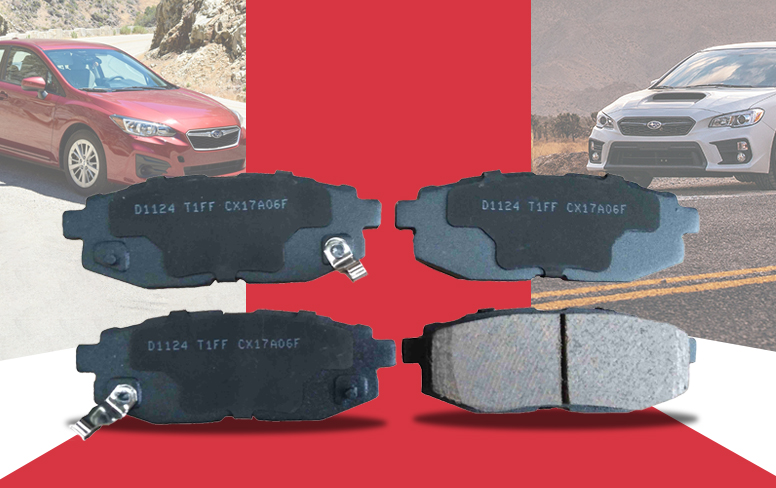
Superior High-Temperature Resistance: Ceramic fibers and modified binders withstand extreme heat, preventing material deformation or decomposition and avoiding brake failure from high-temperature fading.
Low Wear & Long Lifespan: The combination of ceramic fiber skeletons and lubricating films results in a wear rate only 1/3 to 1/2 that of semi-metallic brake pads, with a service life of 30,000 to 50,000 kilometers.
Low Noise & Eco-Friendly Low Dust: Flexible, low-hardness ceramic fibers and lubricating films reduce braking noise. Wear produces non-toxic ceramic dust that does not adhere easily to wheel hubs.
Efficient Heat Dissipation: Heat-conductive fillers quickly transfer and dissipate braking heat, preventing overheating of brake pads and thermal deformation of brake discs.
High-Strength, High-Temperature Fibers: New fibers like silicon nitride, which resist temperatures exceeding 1200°C, are being developed for high-performance vehicles.
Eco-Friendly Binders: Water-based phenolic resins and bio-based resins (e.g., soybean protein resin) are replacing traditional options to reduce harmful emissions like formaldehyde.
Functionalization & Lightweighting: Nano-abrasives and rare earth-modified lubricants enhance performance. Hollow fibers and lightweight fillers reduce weight, meeting electric vehicles’ range requirements without compromising braking efficiency or lifespan.
Custom Service
For the past 15 years, Sencheer is supplying the global market with custom brake pads using OE technology. Our customization range is wide and free, which covers logo, label, brand box, carton design, spraying code etc.
Contact Number
+86 153 7870 3202
Navigation
+86 153 7870 3202
Songjia Town Development Zone, Lingcheng District, Dezhou City, Shandong, China