+86 153 7870 3202
+86 153 7870 3202
Table of contents:
The Braking Dilemma of an Electric Giant: Why Does Model X Need Ceramic Brake Pads?
Performance Resonance: The Compatibility Logic Between Ceramic Brake Pads and Model X
Market Choices: Upgrade Paths and Trends for Model X Owners
Rational Selection: Compatibility Boundaries and Considerations
Conclusion: Symbiotic Development of Ceramic Brake Pads and Electrification
The Braking Dilemma of an Electric Giant: Why Does Model X Need Ceramic Brake Pads?
As a premium electric SUV weighing over two tons, the Tesla Model X confronts dual challenges that traditional gasoline vehicles rarely encounter. On one hand, the additional weight from its battery pack makes it 300kg heavier than comparable fuel-powered SUVs, resulting in greater inertial impact during emergency braking. On the other hand, despite the regenerative braking system reducing mechanical brake usage by 40%, the high-frequency braking demands from the motor's instantaneous torque release still subject the brake pads to frequent high-temperature loads.
Traditional semi-metallic brake pads easily reveal their flaws under such conditions: rapid temperature spikes after continuous braking cause friction coefficient degradation (known as "thermal fade"), extending stopping distances while producing harsh noise and excessive black dust—compromising both driving safety and wheel aesthetics. The core properties of ceramic brake pads, however, precisely align with the Model X's critical braking needs.
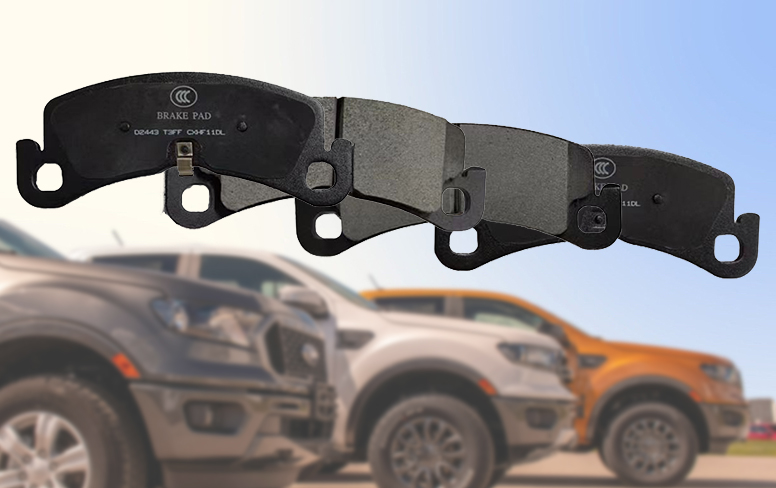
Performance Resonance: The Compatibility Logic Between Ceramic Brake Pads and Model X
High-Temperature Resistance: Stable Output Under Heavy Loads
During continuous mountain driving or high-speed emergency braking, the Model X's brake pad temperature can soar above 500℃. Ceramic brake pads, formulated with ceramic fibers and composite materials, maintain a stable friction coefficient of 0.35-0.45 even at 600℃, with a degradation rate of less than 15%. After upgrading to NETZSCH N-one ceramic brake pads, one Model X owner reported no brake fade during intense mountain braking, with the 100-0km/h stopping distance shortened by nearly 1 meter compared to the original equipment—a vital safety enhancement for a two-ton SUV.
Low Dust & Quiet Operation: Aligning with Luxury Vehicle Standards
Luxury car owners value driving comfort as much as performance. Through formula optimization, ceramic brake pads reduce dust emissions by 50% compared to semi-metallic alternatives, with an 80% decrease in wheel hub adhesion. The aforementioned Model X owner noted that after the upgrade, wheels were no longer covered in "black dust," cutting car washing frequency in half. Additionally, the sharp metallic squeal during braking was eliminated entirely, significantly improving in-cabin quietness—mirroring the logic behind luxury models like the BMW 5 Series and Mercedes-Benz E-Class adopting ceramic brake pads.
Longevity: Reducing Maintenance Costs for EV Owners
Ceramic brake pads boast a service life of 40,000-60,000km, 20%-30% longer than semi-metallic pads, with some custom formulations exceeding 100,000km. For Model X owners with high annual mileage, this means reduced time and expenses from frequent replacements. Furthermore, their minimal wear on brake discs extends disc lifespan by over 20%, further lowering overall vehicle maintenance costs.
Market Choices: Upgrade Paths and Trends for Model X Owners
Aftermarket Becomes the Primary Choice
While ceramic brake pads are not yet standard equipment on the Model X, aftermarket upgrade demand is growing rapidly. Data shows that the penetration rate of ceramic brake pads in China's new energy vehicle aftermarket rose from 10% in 2019 to 25% in 2024, with premium electric SUV owners as the core consumer group. Specialized models like the NETZSCH N-one, calibrated for regenerative braking systems, have become popular among enthusiast communities.
Technological Evolution Targeting Electrification Needs
To better adapt to electric vehicles, ceramic brake pads are evolving toward "low drag" designs. Optimized formulations and structural improvements reduce drag torque by 30%, minimizing mechanical losses during regenerative braking. Meanwhile, lightweight honeycomb backplates reduce pad weight by 15%, enhancing the Model X's braking response speed—an advancement perfectly aligned with electrification trends.
Rational Selection: Compatibility Boundaries and Considerations
Despite their advantages, Model X owners should note two key points when choosing ceramic brake pads: first, the price threshold—they cost 2-3 times more than semi-metallic pads and require matching brake discs; second, scenario suitability—basic ceramic formulations suffice for urban commuting, making high-performance track-oriented options unnecessary. Additionally, installation should be performed by shops with EV calibration capabilities to ensure precise parameter matching with the regenerative braking system, avoiding issues like stiff brake feel.
Conclusion: Symbiotic Development of Ceramic Brake Pads and Electrification
The Model X's demand for ceramic brake pads epitomizes the upgrade of new energy vehicles toward higher performance and quality. As global electrification accelerates, technological breakthroughs in low-copper formulations, lightweight design, and customization will establish ceramic brake pads as the preferred choice not only for premium electric SUVs but also for mid-range electric models. For EV owners prioritizing safety, comfort, and low maintenance costs, ceramic brake pads represent a worthwhile braking upgrade investment.
RECENT NEWS
Sencheer Launches New Ceramic Brake Pads in August
Aug. 11, 2026
Subtle Chassis Refinement of Ceramic Brake Pads for BMW
Aug. 04, 2026
Sencheer Launches New Ceramic Brake Pads in July
Jul. 20, 2026
Custom Service
For the past 15 years, Sencheer is supplying the global market with custom brake pads using OE technology. Our customization range is wide and free, which covers logo, label, brand box, carton design, spraying code etc.
Contact Number
+86 153 7870 3202
Navigation
+86 153 7870 3202
Songjia Town Development Zone, Lingcheng District, Dezhou City, Shandong, China